Unleash Vintage Charm: Antique Book Junk Journal Canva Template
There’s a certain magic to aged paper—the way the edges crumble, the subtle stains that hint at a story, the texture that feels alive with history. For anyone who loves junk journaling, scrapbooking, or creating mixed-media art, capturing that authentic, timeworn look can be a challenge. That’s where a tool like the Antique Book Junk Journal Canva Template comes in. It’s not just a set of digital overlays; it’s a bridge to a more expressive, layered creative process, designed for those who want to add depth and narrative to their projects without starting from scratch.
The Soul of the Template: More Than Just Grunge Borders
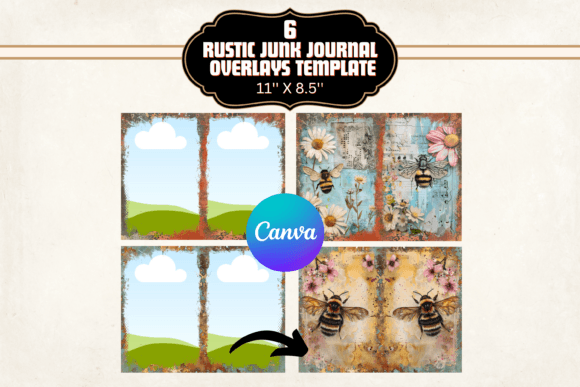
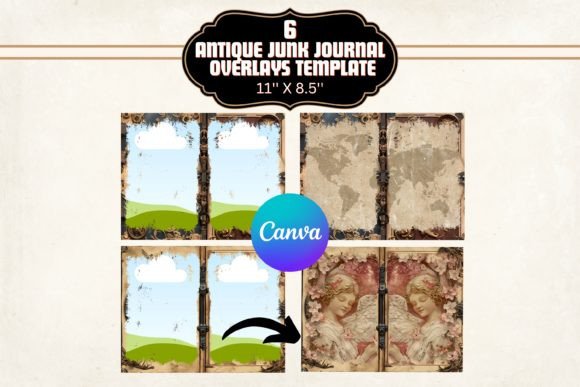
At first glance, you might see six distinct grunge border overlays. But look closer. Each one in this Canva template set is a carefully crafted piece of visual storytelling. The edges are authentically distressed, mimicking the brittle fraying of old book spines and the foxing of antique paper. The overlays aren’t just dirty; they have personality. Some carry the faint ghost of ink stains, others the subtle yellowing of time, and a few feature delicate, almost floral, patterns of decay. This isn’t random noise. It’s a curated aesthetic that evokes the feeling of discovering a forgotten volume in a dusty attic.
The style is inherently vintage and rustic, leaning into a grunge texture that feels organic rather than digital. It has the warmth of handmade craft combined with the precision of a professional design asset. This duality is its strength. It allows a designer to impose a sense of history and authenticity onto modern projects, creating a compelling contrast that catches the eye and engages the viewer on a tactile level. For a brand identity centered on heritage, artisanal quality, or storytelling, this aesthetic is pure gold.
Where This Aesthetic Truly Shines: Practical Applications
The utility of the Antique Book Junk Journal Canva Template extends far beyond the literal creation of a journal. Think of it as a powerful stylistic tool for a range of creative and commercial endeavors.
- Editorial & Publishing Design: Imagine a book cover for a historical novel, a mystery, or a memoir. Using one of these overlays as a background layer instantly sets a tone of intrigue and timelessness. For internal chapter headings or section dividers in a magazine or ebook, it provides a beautiful, thematic break that enhances the reader’s experience.
- Brand Storytelling & Marketing: For a coffee shop, a boutique bakery, a vintage clothing store, or a consultant specializing in legacy businesses, these overlays can transform social media graphics. A simple quote or promotion placed over a textured, aged background gains depth and perceived value. It tells customers, "We value substance and story." Use them for Instagram Stories, Facebook posts, or website hero images to build a consistent, memorable brand atmosphere.
- Packaging & Product Design: The overlay textures are perfect for labels, tags, and packaging for products like artisanal foods, candles, soaps, or stationery. They communicate craft and care. Applying the texture to a business card or a thank-you note template elevates the unboxing experience, making it feel personal and premium.
- Personal Creative Projects: Of course, for the hobbyist, this is a dream. Create stunning digital scrapbook pages, design unique greeting cards, or craft a cohesive set of printable wall art. The Canva platform makes it incredibly accessible. You can drag and drop your own photos into the frames, add text, and experiment with layers without needing advanced software skills. It’s a fantastic entry point for beginners and a time-saver for seasoned crafters.
Making It Work: A Designer’s Perspective on Integration
Using a textured overlay effectively requires a bit of thoughtful integration. Here’s how to approach it like a pro.
First, consider visual hierarchy. The overlay is your background, your stage. Your primary content—whether it’s a photo, a headline, or a logo—needs to stand out. This often means choosing imagery or type that has enough contrast or clean lines to pop against the complex texture. A bold, clean sans serif font can create a striking modern contrast against the vintage overlay, while an elegant script font can complement its romantic feel. The key is to test font pairing within the template to ensure your message isn’t lost.
Second, play with the layers. The instructions included with the template set are crucial here. You’re not just slapping a border on top. You can adjust the opacity of the overlay to make it a subtle hint or a dominant feature. You can layer multiple overlays from the set for even more complexity. You can use the Canva tools to blend modes, which changes how the overlay interacts with the layers beneath it, creating effects like multiply or screen for different moods.
Third, think about consistency. If you’re using this for a series of social media posts or a set of product labels, decide on a consistent approach. Will you always use the same overlay? Will you use different ones but keep the same color tone? Maintaining some visual consistency across applications strengthens your project’s brand identity, even if it’s just a personal project. This turns a collection of pieces into a cohesive collection.
Finally, remember the medium. These are high-resolution (300 DPI) files, meaning they are perfectly suited for both digital screens and high-quality print. Whether you’re designing for a blog or printing a physical journal, you won’t lose the crisp, detailed quality of the textures. This versatility makes the set a valuable part of any creator’s library of design assets.
The Antique Book Junk Journal Canva Template set is ultimately about empowerment. It gives you a sophisticated, ready-made aesthetic foundation. This frees you to focus on the most important part: your own creative vision, your story, and the message you want to convey. It’s a practical shortcut to achieving a complex, handmade look that resonates with emotion and authenticity. In a digital world saturated with clean, flat design, this textured, narrative approach is a powerful way to stand out and connect.